The bunk room gets the photos. The bracket behind the dresser does the work
By David Myers, Broker Associate · MyOrlandoVacationHome.com · Last updated October 2026
Furnishing an Orlando vacation rental is a design job and a safety job. Federal rules from the Consumer Product Safety Commission (CPSC) set the standard for bunk beds: guardrails on both sides of any bed more than 30 inches off the floor, a continuous rail on the wall side, rails at least 5 inches above the mattress and a warning label. The CPSC requires places of public accommodation that provide cribs to use cribs meeting current standards, and it recommends a bare sleep space with only a fitted sheet. It also recommends anchoring dressers and TVs and using cordless window coverings. When you buy a home that comes furnished, check every bunk bed, crib and dresser before the first guest arrives.
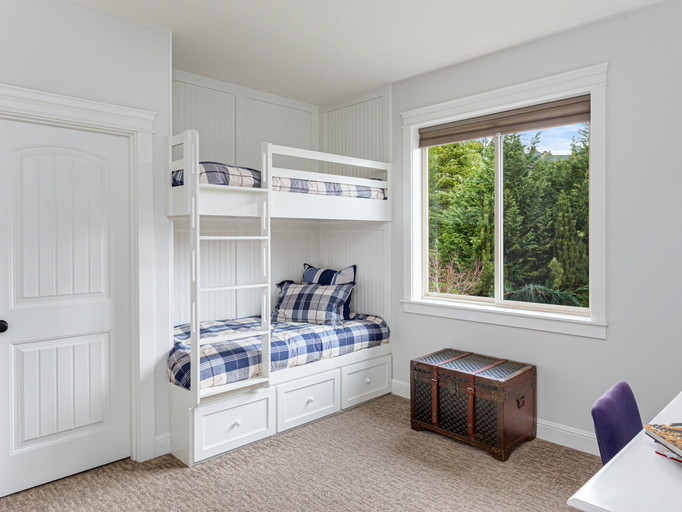
Every Orlando vacation home has a showpiece room. Often it's the bunk room: four or six beds, a theme on the wall, the first photo in the listing.
Nobody photographs the anti-tip bracket screwed into the stud behind the dresser. It's still the piece of furniture we check first. Here's how to furnish a home that books well and holds up to a different group every week.
How Should You Plan the Beds in an Orlando Vacation Rental?
Start from the number of guests the home may sleep, then fit the beds to the rooms.
Sleeping capacity is what most guests filter by, so it drives bookings. But the number on the listing has to match what the home is allowed to hold – check the HOA documents, any local occupancy rule and your insurance policy before you buy beds. Then plan each room: king or queen beds in the primary suites, and bunks or twins where the room is small or the floor plan calls for it. A short-term rental (STR) that sleeps more on paper than it sleeps comfortably earns that in its reviews.
Durability matters more than in a home you live in. Solid frames, washable slipcovers and performance fabrics survive turnovers; glass tops and delicate finishes don't. Our design and outdoor space guide and our themed rooms guide cover the look – this post covers what keeps it safe.
What Do Federal Rules Say About Bunk Beds?
Guardrails on both sides, small openings, and a warning label – on every bunk sold in the US.
The CPSC's bunk bed standard applies to manufacturers and importers, but it's also the checklist for an owner buying or inspecting bunks.
CPSC bunk bed requirements, 16 CFR parts 1213 and 1513.
Built-in bunks need the same attention. A carpenter-built bunk wall can look great and still miss a rail or leave a gap, so measure it against the same list. If the seller's bunks have no label at all, we treat that as a question for the inspection, not a detail.
Should a Vacation Rental Offer a Crib or Play Yard?
Many do – and if you provide one, it needs to meet current federal standards.
The CPSC requires child care facilities and places of public accommodation that provide cribs to use cribs that meet its current standards. Its page doesn't say whether a privately owned vacation rental falls in that group, so we treat any crib or play yard in a rental as if it must comply. That means buying new from a retailer rather than secondhand, registering it and checking the CPSC recall list from time to time.
How it's set up matters as much as what you buy. The CPSC's rule is "bare is best": nothing in a crib, bassinet or play yard but a fitted sheet – no pillows, blankets or padded bumpers, which the CPSC has banned. Tell the cleaning crew too, so a decorative throw doesn't end up in the crib after a turnover. A high chair and a stair gate are common requests as well; buy them new and add them to the inspection list.
How Do You Keep Dressers and TVs From Tipping?
Anchor them to the wall – every dresser, bookcase and TV.
The CPSC's Anchor It campaign recommends anchoring top-heavy furniture to the wall with anti-tip brackets and installing the anti-tip device that comes with a new dresser right away. TVs should sit only on furniture built to hold a TV, and a TV that isn't wall mounted should still be anchored to the wall. Keep remotes, toys and anything else that invites climbing off the tops of dressers and TV stands.
Newer dressers and other clothing storage units are built to a mandatory federal stability standard that tests them on carpet, with drawers loaded and opened, and with the weight of a climbing child. The CPSC still recommends anchoring them. In a rental, the anchors also need checking at each deep clean – guests move furniture, and brackets work loose.
What About Window Blinds and Cords?
Go cordless in every room.
The CPSC recommends cordless window coverings in all rooms where a child may be present, which in a vacation rental is every room. If you can't replace corded blinds right away, it suggests shortening pull cords, keeping cords out of reach, anchoring continuous-loop cords to the floor or wall and moving beds and cribs away from windows. Blackout shades in the bedrooms are popular with guests and come in cordless versions.
What Should You Check When Buying a Furnished Vacation Home?
The furniture's condition, its safety and its paperwork – before closing.
Most Orlando vacation homes sell furnished, so the furniture is part of what you're buying. Walk the home with the inventory list and check each bunk bed against the table above, look behind dressers and TVs for anchors, and note any crib, play yard or high chair and its model so you can check recalls. Our guide to buying a vacation rental that's already renting covers the inventory and the bookings that come with it.
Two more things follow the furniture. In Florida, furnishings in a rental are taxed as tangible personal property, with a return due to the county property appraiser every year – see our vacation rental taxes guide. And the home still has to meet Florida's vacation rental safety rules on smoke alarms, locks and pools, covered in our safety rules post. Our insurance guide covers the liability side.
Pros, Cons and Our Take
Pros
- Bunk rooms raise sleeping capacity in smaller bedrooms and photograph well.
- A crib, play yard and high chair on hand answer common guest requests before they're asked.
- The federal standards give owners a clear checklist for each piece.
Cons
- Custom and built-in bunks can miss the federal guardrail and gap rules.
- Anchors and rails loosen with heavy use and need regular checks.
- Secondhand cribs and furniture can carry recalls you won't see by looking.
Our Take
Buy the photos, but inspect the hardware. Before the first booking, every upper bunk should have two rails and its label, every dresser and TV should be anchored, every crib should be new and bare, and every blind should be cordless. Then put those items on the turnover checklist so they get looked at every week... because the bracket behind the dresser only works if somebody checks it's still there.
What Owners Should Know
- Match the bed count on the listing to the occupancy your HOA, local rules and insurer allow.
- Keep the manufacturer labels on bunk beds and cribs, and keep a list of model numbers for recall checks.
- Add rails, anchors and crib setup to your manager's inspection and turnover checklists – see our turnover guide.
- Replace damaged furniture rather than repairing safety parts yourself.
Planning a purchase? Start with our buyer's guide and our comparison of condos, townhomes, pool homes and condotels.
Official Sources
- CPSC: bunk beds business guidance
- CPSC: federal safety standard for bunk beds
- CPSC: crib requirements for child care providers and public accommodations
- CPSC: infant sleep safety dos and don'ts
- CPSC: ban on crib bumpers and inclined sleepers
- CPSC: stability standard for dressers and clothing storage units
- CPSC: Anchor It furniture and TV tip-over safety
- CPSC: cordless window coverings
- CPSC: recalls and product safety warnings
Buying or selling an Orlando vacation home? Call/Text David Myers at 407.801.3286 or send us a message.
Frequently Asked Questions
What are the federal safety rules for bunk beds?
A bed whose foundation is more than 30 inches off the floor needs guardrails on both sides, the wall-side rail must be continuous, rail tops must sit at least 5 inches above the mattress, and the bed must carry a warning label and state the mattress size to use.
Who can sleep on the top bunk?
The warning label the federal standard requires says not to place children under 6 on the upper bunk. Post the same rule in the room.
Should a vacation rental provide a crib?
Many do. CPSC rules require places of public accommodation that provide cribs to use cribs meeting current federal standards, so buy new, check for recalls and keep the sleep space bare.
Do I need to anchor furniture in a vacation rental?
The CPSC recommends anchoring dressers and other top-heavy furniture to the wall and securing TVs, even ones that are not wall mounted.
What window coverings are safest in a rental?
Cordless ones. The CPSC recommends cordless window coverings in every room where a child may be present.
David Myers is a licensed Florida real estate broker, working as a broker associate with Ziro Realty, and is not an attorney, inspector or product safety professional. This article is general information. Product standards and recalls change; check the CPSC, your manufacturer's instructions and your insurer before you furnish a rental.